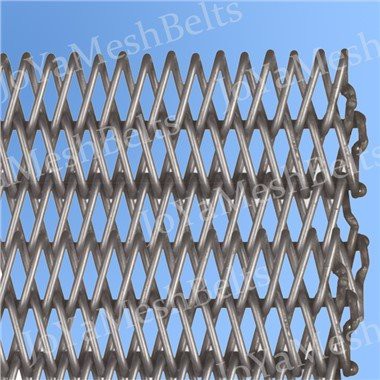
Grid Link Conveyor Belts
Quality: are known for their high-quality materials and construction, ensuring durability and longevity of the products.
Description
Why Choose Us
Quality
Are known for their high-quality materials and construction, ensuring durability and longevity of the products.
Customization
Offers customization options for their products to fit the specific needs and requirements of customers.
Competitive pricing
Offer competitive pricing without compromising the quality of their products and services.
Customer service
JoYa's customer service is known to be responsive, prompt and helpful in addressing the needs and concerns of customers.
What Is Grid Link Conveyor Belts
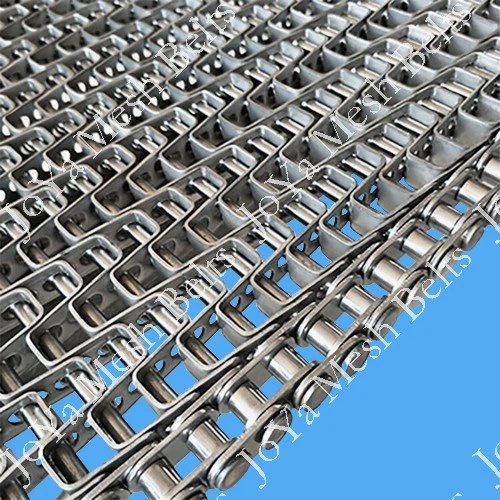
Grid link conveyor belts are a type of modular conveyor belt made up of interlocking grid links. These links are either molded or welded together to form a strong and versatile conveyor belt system. The design allows for easy installation and maintenance, as well as customization to meet specific application requirements. Grid link conveyor belts are often used in industries such as food processing, automotive manufacturing, and pharmaceuticals where hygiene, flexibility, and durability are essential.




Regular Maintenance
Regular maintenance of Grid Link Conveyor Belts is essential to ensure maximum efficiency and productivity. This includes inspecting the belts for any damage, replacing worn or damaged parts, lubricating moving parts, and cleaning the belts.
Proper Belt Tensioning
Proper belt tensioning is essential to ensure the belts operate efficiently. Over-tensioning can cause excess wear on the belt while under-tensioning can cause slippage and reduced efficiency. Proper belt tensioning should be ensured as per the manufacturer's recommended specifications.
Upgrading Conveyor Belts
Upgrading Grid Link Conveyor Belts with newer and more efficient models can improve productivity. Upgrades like better-quality belts, optimized pulleys, and mechanical fastening systems can reduce downtime and ensure better quality transportation of commodities.
Implementing Automation
Incorporating automation technology like sensors and monitoring systems can improve the efficiency and productivity of Grid Link Conveyor Belts. These systems can detect and alert operators of belt damage, belt jamming, and other potential issues.
Training and Development
Training and development of employees operating Grid Link Conveyor Belts can enhance the productivity and efficiency of the equipment. Proper training on equipment maintenance, best practices, and equipment operation can improve the reliability of the equipment and minimize downtime.
Highly Flexible and Versatile Grid Link Conveyor Belts


Grid link conveyor belts are a type of conveyor belt that is highly flexible and versatile. These belts consist of a series of small interconnected links that are joined together by a metal rod or pin. The links can be made from a variety of materials, such as stainless steel, plastic, or nylon, and can be customized to fit specific applications.
One of the key advantages of grid link conveyor belts is their flexibility. The individual links can move independently, allowing the belt to conform to the shape of the material being transported. This makes them ideal for applications where the product being transported is fragile or irregularly shaped.
Grid link conveyor belts are also highly versatile, as they can be configured in a variety of ways to suit different applications. For example, they can be made to run in a straight line, curve around corners, or even travel up and down inclines. Additionally, the individual links can be customized with different coatings or surface treatments to provide friction, chemical resistance, or other properties as needed.
Due to their flexibility and versatility, grid link conveyor belts are used in a wide range of industries, including food and beverage, pharmaceuticals, logistics, and manufacturing. They are particularly well-suited for applications such as packaging, sorting, and conveying delicate or irregularly-shaped items.
grid link conveyor belts are a highly flexible and versatile conveyor solution that offers many advantages over traditional conveyor belts. They are able to conform to the shape of the material being transported, can be configured in a variety of ways to suit specific applications, and can be customized with different coatings or surface treatments for added functionality and durability.
High strength-to-weight ratio
Despite their lightweight design, Grid Link conveyor belts have a high strength-to-weight ratio, making them ideal for transporting heavy loads.
Durability
Grid Link conveyor belts are incredibly durable and long-lasting, making them ideal for heavy-duty industrial applications.
Easy to clean
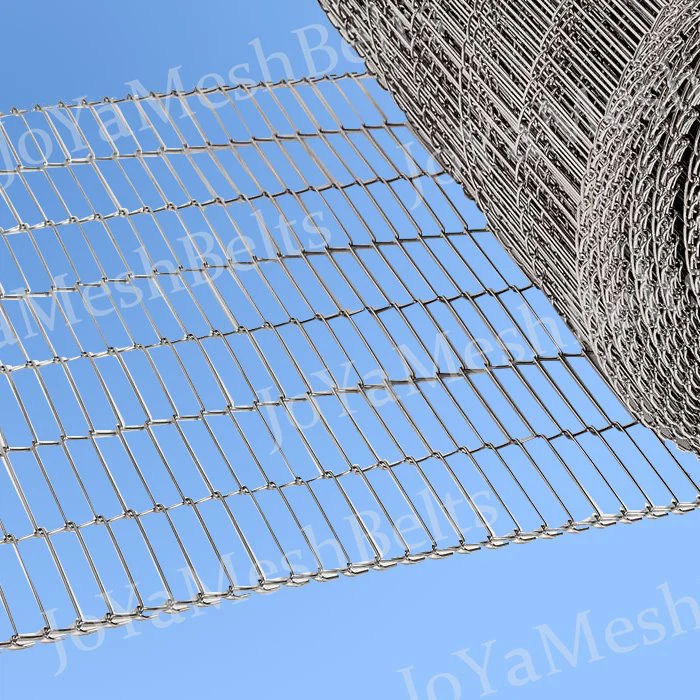
The wire mesh design of Grid Link conveyor belts makes them easy to clean, allowing for better hygiene in food and beverage processing facilities.
Flexibility
Grid Link conveyor belts are flexible and can be shaped to fit the specific needs of various manufacturing processes.
Low friction
The wire mesh design of Grid Link conveyor belts creates a low-friction surface that reduces the chance of product damage and wear and tear on the belt itself.
Non-slip surface
The wire mesh design of Grid Link conveyor belts provides a non-slip surface, preventing products from sliding around during transport.
Good airflow
The open design of Grid Link conveyor belts allows for good airflow, which is useful in processes that require cooling or drying.

What Are Technical Specifications Grid Link Conveyor Belts
Load Capacity
The load capacity of the link conveyor belts depends on the link size, material, and width of the belt. Typically, the load capacity ranges from 50 kg/m to 500 kg/m.
Width and Length
The width and length of the link conveyor belts can vary according to the customer's specific needs. The standard sizes range from 300mm to 2000mm in width, and the length can be customized.
Accessories
The link conveyor belts can be accessorized with belt tracking systems, flight attachments, side guards, cleats, drive sprockets, and other customized accessories.
Temperature Range
The link conveyor belts can withstand a temperature range of -40°C to +120°C, depending on the material used.
Surface Finish
The surface finish of the link conveyor belts can be smooth, embossed, or perforated, depending on the application.
Material
The link conveyor belts are usually made of stainless steel, mild steel, aluminum, or plastic.
Link Size
The link size may vary depending on the application and required strength of the conveyor belt. Typically, the link size ranges from 6mm to 25mm.
Applications Of Grid Link Conveyor Belts
1. Food Processing: Link conveyor belts are commonly used in food processing industries for conveying fruits, vegetables, meat, poultry, baked goods, and other food products.
2. Packaging: Link conveyor belts are used in packaging industries for conveying boxes, cartons, and other packaged goods.
3. Manufacturing: Link conveyor belts are used in manufacturing industries for conveying components, parts, and goods.
4. Material Handling: Link conveyor belts are used in material handling industries for moving heavy and bulky materials.
5. Recycling: Link conveyor belts are used in recycling industries for transporting materials such as paper, plastics, metals, and other recyclable materials.

What Are The Working Theory Of Grid Link Conveyor Belts
The working theory of grid link conveyor belts is based on the interlocking of perpendicular wires to form a grid or mesh-like structure. The design of these belts allows for a high degree of flexibility and durability, making them ideal for conveying a wide range of products in various industries. The flat and uniform surface of grid link conveyor belt ensures the stable transportation of products, avoiding any damage.
This type of conveyor belt uses a special hinge joint that connects two adjacent wire rods. The hinge joint is designed to allow the wire rods to move independently of each other, resulting in a highly flexible and adaptable moving surface. The grid-like structure also allows for excellent drainage and airflow, making these belts ideal for use in applications where water and air need to flow freely through the conveyor system.
Grid link conveyor belts are commonly found in industries such as food processing, packaging, and automotive manufacturing. They are often used to move products in and out of drying ovens, heat treatment processes, and other high-temperature applications. The flexibility and strength of these belts make them ideal for use in conveyor systems that require a high degree of precision and reliability.
Maintenance Grid Link Conveyor Belts
1. Keep the conveyor belt clean by regularly removing any debris, dust or dirt from the belt.
2. Check the alignment of the belt regularly to ensure it is running straight on the rollers. Misalignment can damage the belt.
3. Lubricate the bearings and rollers at regular intervals to reduce friction and wear on the belt.
4. Replace any damaged or worn parts such as belts, bearings, or rollers as soon as possible to avoid more extensive damage.
5. Conduct regular inspections to identify potential problems early and address them before they become more serious.
6. Train employees to operate the conveyor belt correctly and safely, including how to load and unload objects in a way that minimizes damage to the belt.

As a metal conveyor belt system supplier, not only know how to make a good quality belt, we know how to provide a good and effective solution of for our customers in many of applications and industries; From food to glass, from heat treatment to wood, we make conveyor belt systems and creative solution for our customers, and know how to solve the problems of belts in machines, and give our customers feedback within half hour, and through telephone or meet in factory to provide service and solve the problems,so we always work together with you to meet any problem in conveyor belts.
FAQ
Hot Tags: grid link conveyor belts, China grid link conveyor belts manufacturers, suppliers, factory, Shot Blast Belts, metal detector belt conveyor system, metal mesh belt conveyor, heavy duty conveyor belt manufacturers, Grid Link Conveyor Belts, flat metal conveyor chain